'%3e%3cpath%20d='M8%2014C11.3137%2014%2014%2011.3137%2014%208C14%204.68629%2011.3137%202%208%202C4.68629%202%202%204.68629%202%208C2%2011.3137%204.68629%2014%208%2014Z'%20fill='%23F0F0F0'/%3e%3cpath%20d='M14.0007%208.0001C14.0007%205.62133%2012.6164%203.56596%2010.6094%202.59546V13.4047C12.6164%2012.4342%2014.0007%2010.3789%2014.0007%208.0001Z'%20fill='%23D80027'/%3e%3cpath%20d='M2%208.0001C2%2010.3789%203.38434%2012.4342%205.39131%2013.4047V2.59546C3.38434%203.56596%202%205.62133%202%208.0001Z'%20fill='%23D80027'/%3e%3cpath%20d='M9.04254%208.78276L10.086%208.26102L9.56428%208.00016V7.47842L8.5208%208.00016L9.04254%206.95667H8.5208L7.99905%206.17407L7.47731%206.95667H6.95557L7.47731%208.00016L6.43383%207.47842V8.00016L5.91211%208.26102L6.95557%208.78276L6.69471%209.3045H7.7382V10.0871H8.25991V9.3045H9.3034L9.04254%208.78276Z'%20fill='%23D80027'/%3e%3c/g%3e%3cdefs%3e%3cclipPath%20id='clip0_17246_88409'%3e%3crect%20width='12'%20height='12'%20fill='white'%20transform='translate(2%202)'/%3e%3c/clipPath%3e%3c/defs%3e%3c/svg%3e)

Blinds vs Shades: What's the Difference?
Blinds To Go Is Here To Shed Some Lights On Window Blinds And Shades
What's the Difference Between Window Blinds and Window Shades?
If you are stuck wondering what the difference is between window blinds and window shades, all you need to know is that blinds have slats that tilt while shades roll or push up entirely in one piece. They share many similarities and are also very different and the experts at Blinds To Go are happy to shed some light on what makes a window covering a blind or a shade, so you can find the window treatment that is best for you. Read on for an in depth look at blind versus shade.
What Are Windows Blinds?
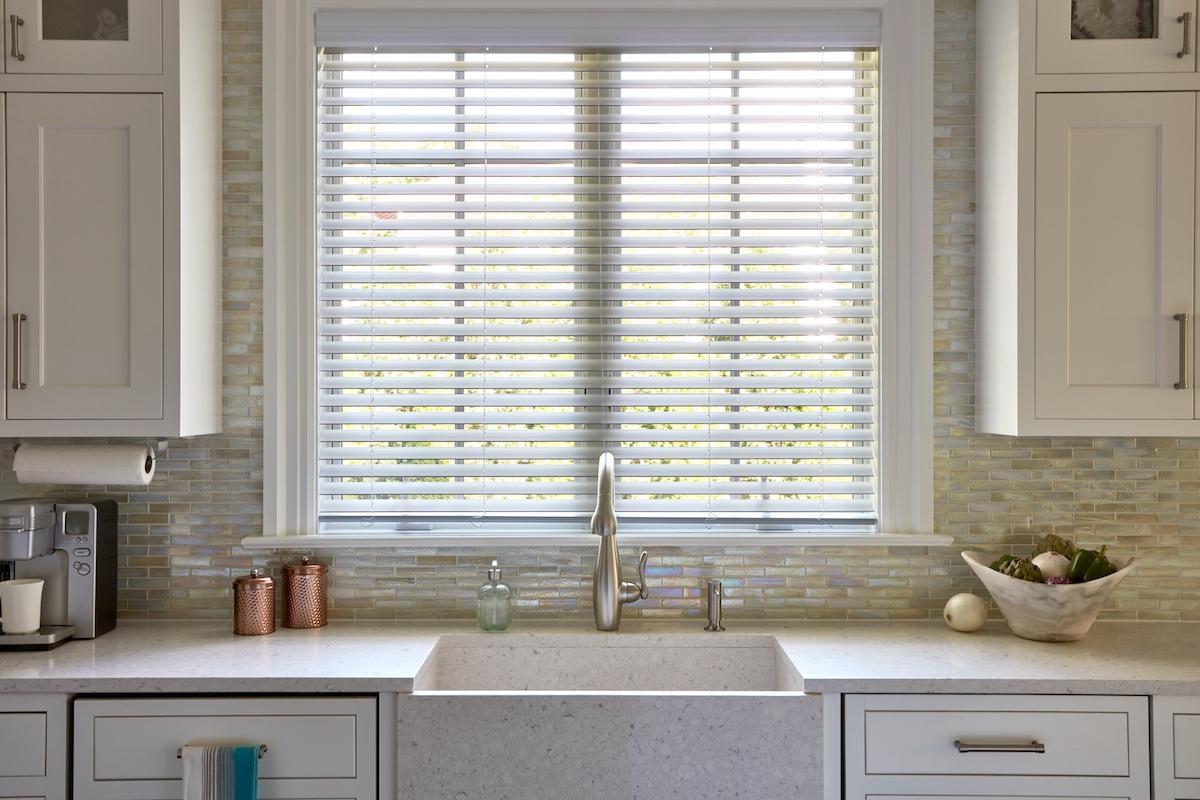
Simply put, blinds for windows are window coverings composed of slats that tilt open and close for privacy and light control. Horizontal or “venetian” blinds raise up and lower down to open, while others, known as vertical blinds, open by sliding left to right. In either style of window covering, the slats can be adjusted for a wide range of needs, from fully open to fully closed. If you want to have privacy and you want to be able to look outside, horizontal and vertical blinds are great solutions because you can keep them closed and also turn individual slats for a quick peek outside.
What Are Window Shades?
Window shades are most simply described as flat window coverings that are made from fabric and roll up to open. Of course, there are some exceptions to this very general rule. One of the many benefits of shades is the ease with which they roll up and virtually disappear. While the slats of a blind stack at the top to open, a shade rolls up as you raise it, giving you an unobstructed view through the window. If you prefer a clear view through your window when you don't need to cover it, a shade will be a better choice. While the slats of a blind stack, shades roll up as you raise them, so it allows you an unobstructed view through your window. Some popular types of shades are roller shades, solar shades, cellular shades, roman shades, and newer styles like cascade shades and serenity sheer shades. Shades offer more options for the mechanism by which you raise and lower your window treatment, compared to blinds, including motorization – an ideal solution for large groups of windows or for those that are difficult to access. Shades are often constructed of fabric and there is a fabric for every need.
Horizontal Blinds: Features and Benefits
Traditionally made of wood or metal, horizontal blinds hit new heights of popularity when they became available in thin vinyl with one-inch slats, which were very affordable and thus popular in many homes and rental properties. Since then, a lot has changed and this humble window covering has received a major makeover, making it one of the most adaptable window coverings available. Vertical blinds can look modern and understated, they can add the natural beauty of wood, or they can provide a pop of stark contrasting color. Today you can choose from a wide range of materials and price points, from beautiful two-inch real wood blinds slats, to durable and realistic looking two-inch faux wood blinds slats and even slats made of fabric, held together with sheer material, rather than the “ladders” or cords that run through traditional blinds. You can fully raise or lower them by manually moving the bottom bar up and down, and on older styles you may raise or lower them with a string. They usually have a tilt rod to tilt the slats open and closed.
Vertical Blinds: Features and Benefits
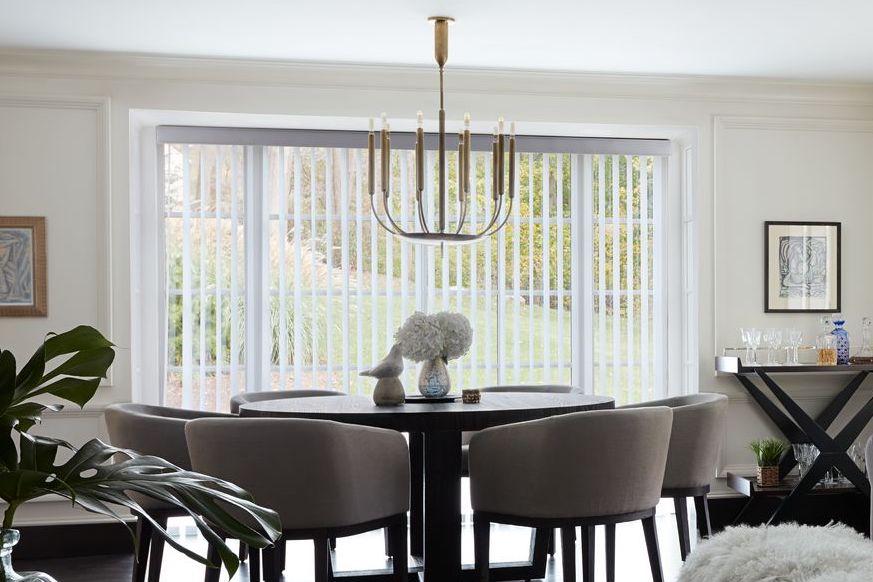
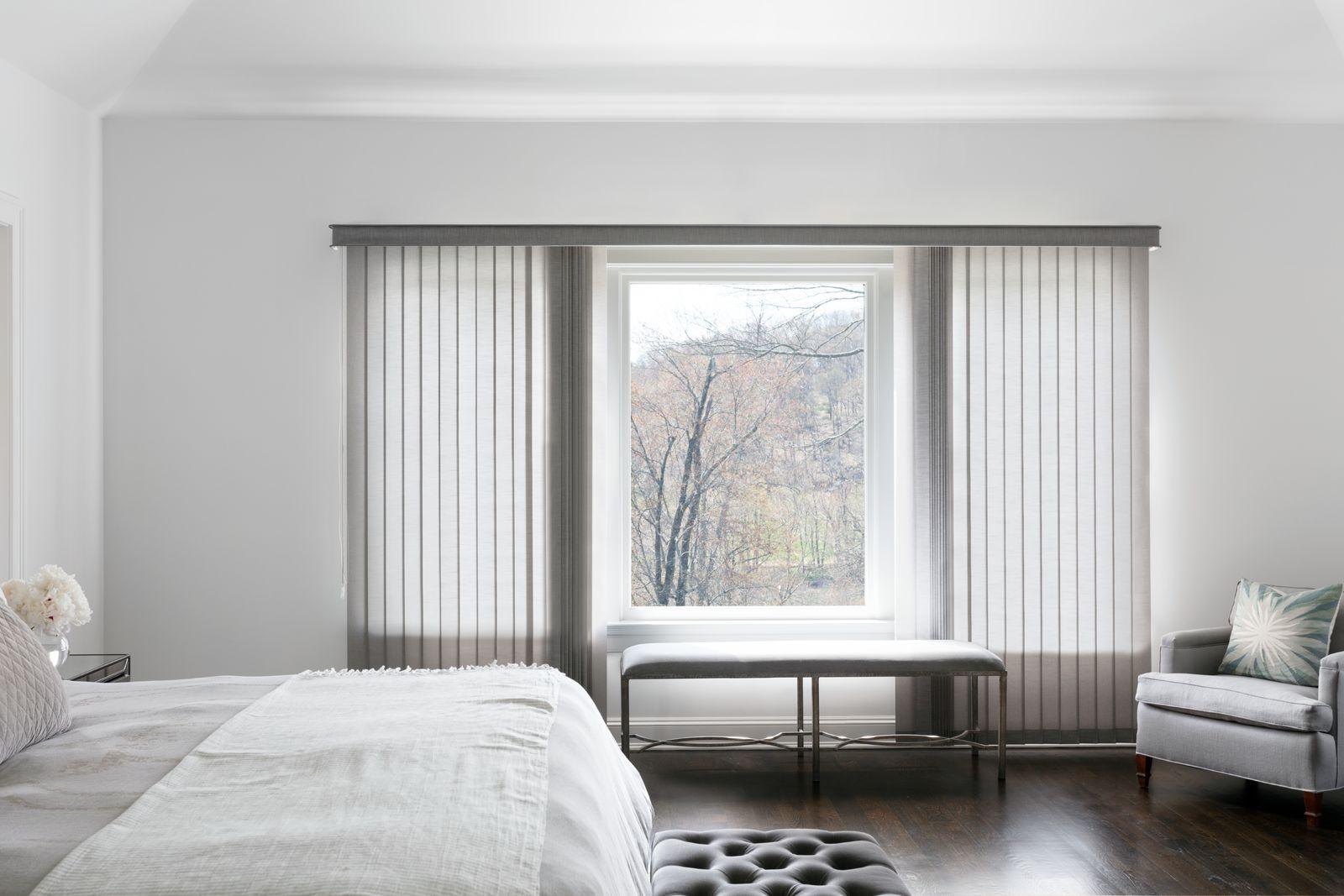
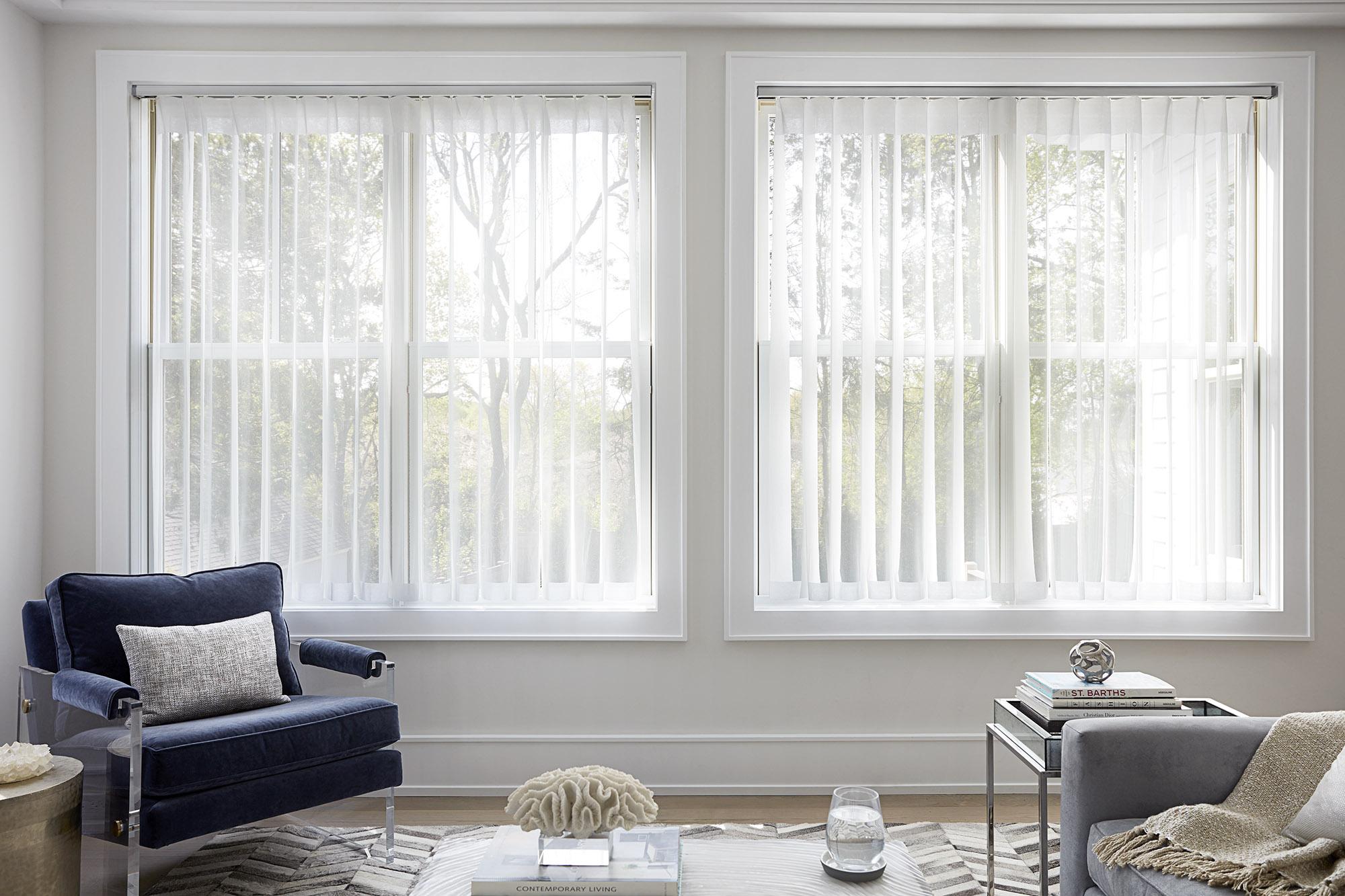
Vertical blinds for windows are comprised of long hanging slats usually 2.5” wide and traditionally composed of vinyl or fabric. They are the classic solution to covering extra large windows and glass doors and are controlled by an attached wand that you twist to tilt the slats and another rod that you use to push the blinds open or to pull them closed. They can open many different ways; the most common ways are from right-to-left, left-to-right, or out from the center, to mimic the way curtains or drapes would open. A newer version of this classic is vertical sheers, which are a hybrid between window blinds and shades. Our Melody® vertical sheers look like sheer curtains but hang from a track like vertical window blinds and are constructed of separate panels of sheer fabric, like the slats of blinds.
What Are the Different Types of Blinds?
There are so many options out there for blinds, whether you're looking for a modern clean look, utilitarian metal, or soft elegant fabrics. Don't forget about room-darkening blinds, perfect for bedrooms or media rooms where light control is essential. If you are interested in window blinds for your home there is sure to be one that is perfect fit for your space. Not sure about which is the best choice for you? Here are just a few of the options that are available—and why they may be just waht you're looking for.
Wood Blinds
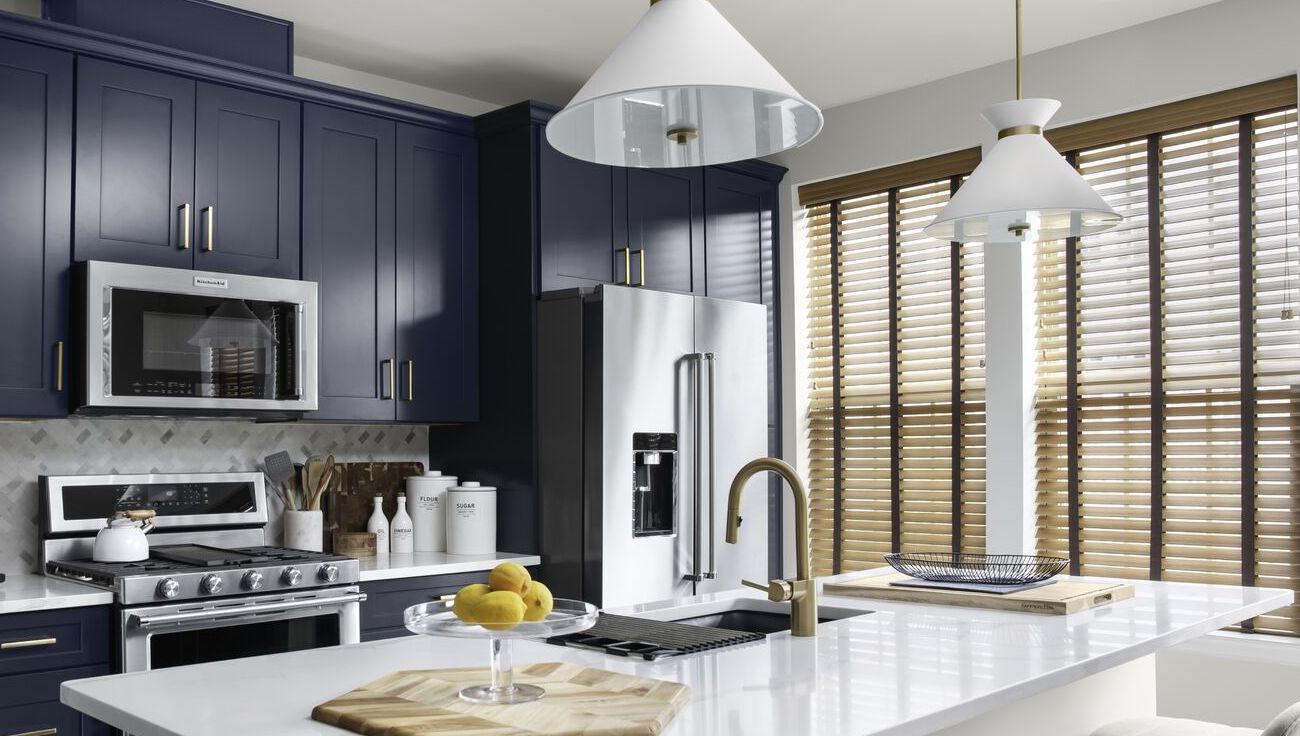
Real wood blinds will add warmth and beauty to any space. The natural-colored slats are stained instead of painted, which allows the wood grain to show through. It is very common to see them in natural wood tones in very modern settings, paired with walls painted in rich dark navy, or forest green color ways. They are popular in white in light, open, modern spaces. A popular decor choice in common areas and bedrooms alike, the only place we don’t recommend natural wood blinds is in small humid bathrooms with poor ventilation. Real wooden blinds look great on large windows but can be much heavier than fabric shades, so we recommend that you split a large window into several separate side-by-side wood blinds. Because of their weight, large wood blinds can be hard to lift and lower on medium to large windows so many people who buy them for larger sizes decide ahead of time that they will rarely raise and lower them, and more often they will just tilt them open and closed with the tilt bar or wand. If you choose a motorized option, for wooden blinds for windows and faux wood blinds, it will only tilt the blinds and will not lower and raise the entire window covering, as it would with motorized roller shade. But most people find that this option suits their needs.
Faux Wood Blinds
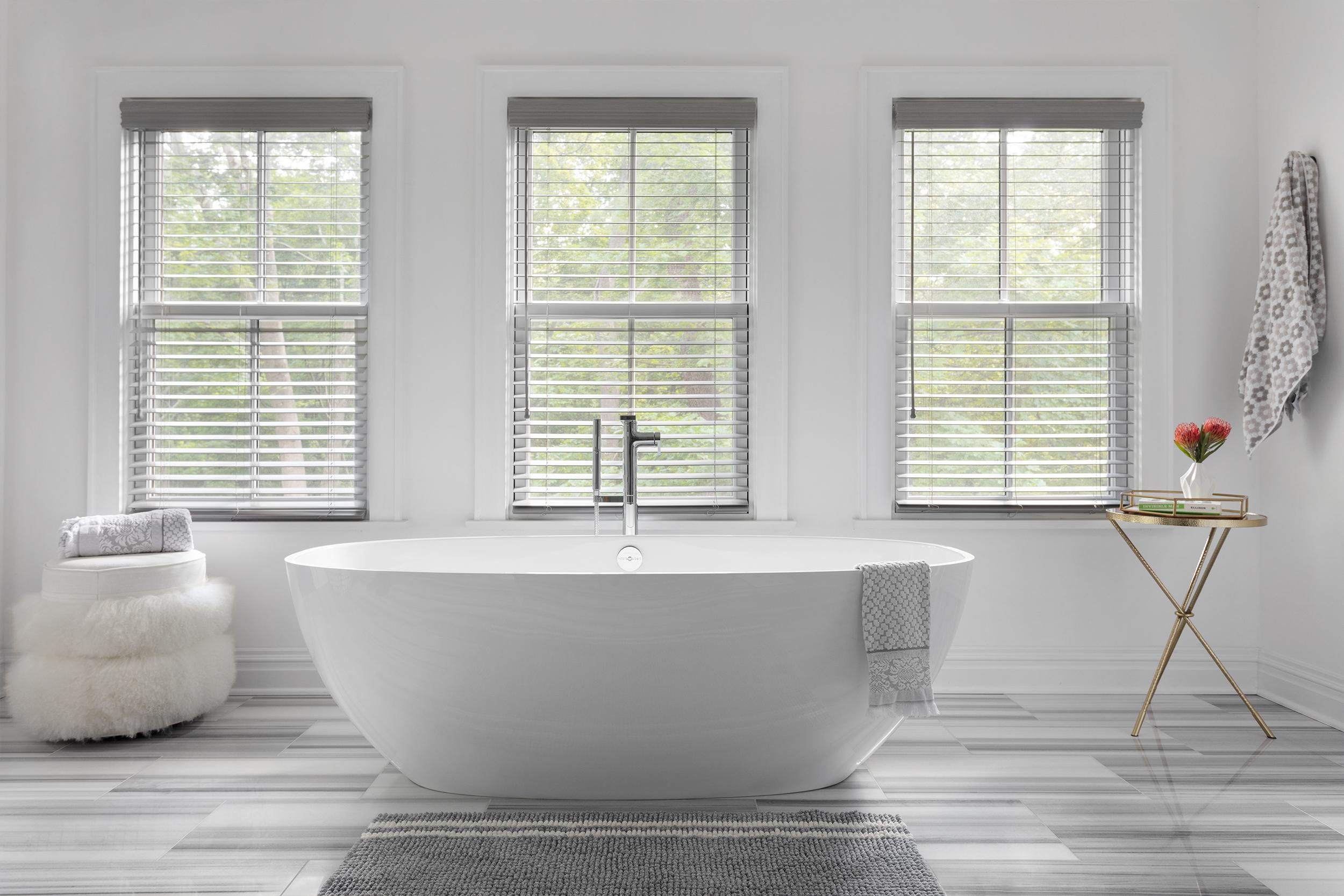
Faux wood blinds are a great choice for bathrooms and kitchens because they are so easy to clean. For windows that are in a more humid room, a wood grain printed faux wood blind will mimic the beauty of wooden window blinds, while holding up well to moisture, because they’re made of PVC. But faux wood blinds are just as popular in bedrooms as they are in kitchens and bathrooms. They have a beautiful, traditional look and come in a wide range of colors ranging from various whites and off-whites to greys and light, medium, and dark wood tones that will coordinate with any decor.
Aluminum Blinds
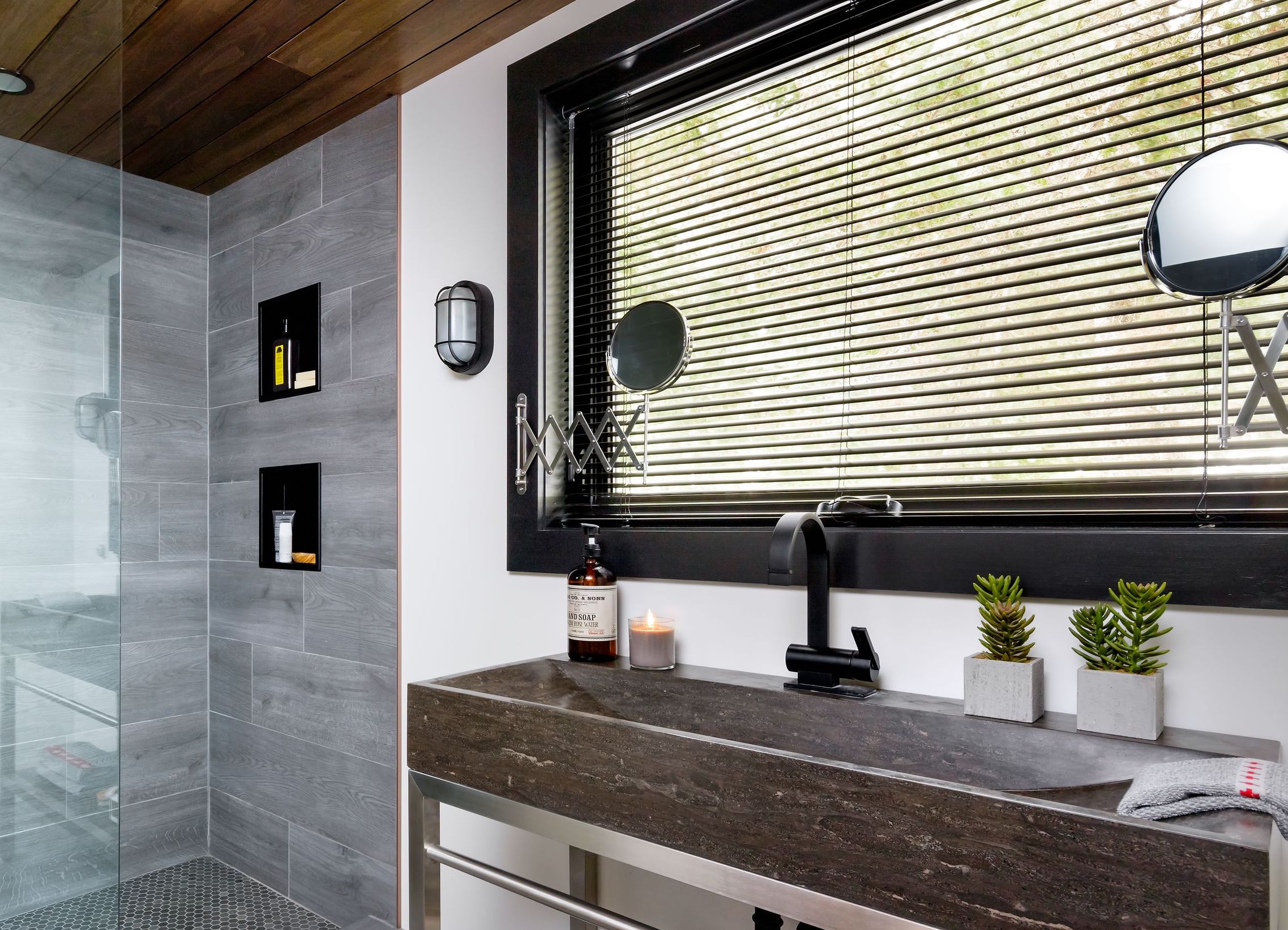
If your decor is more modern or “industrial-chic”, aluminum blinds are a great match. The defining characteristic of this style of window treatment is that the slats, headrail, and bottom bar are made of metal – aluminum, as you may have guessed. Very lightweight, these blinds with thin slats create a small stack when you raise this window covering to the very top of the window, making them an excellent choice for covering small windows. Mini blinds come in a wide range of colors from classic white, bright colors, metallic finishes, all the way to black. There are even a few subtle patterns. They have a baked enamel coating which prevents the sun from affecting the color of the slats, making aluminum blinds great for sunny rooms. Many regions only offer tilt-only aluminum blinds as of 2022, in accordance with new government safety mandates to reduce loose dangling cords.
What Are the Different Types of Shades?
Shades are the classic window covering that you picture when you think of a fabric shade that goes up and out of the way. But even though this shade is a staple, we believe that it can be something even more. From blackout and light filtering options, to a wide range of materials and styles, you can find a shade to suit your home.
Roller Shades
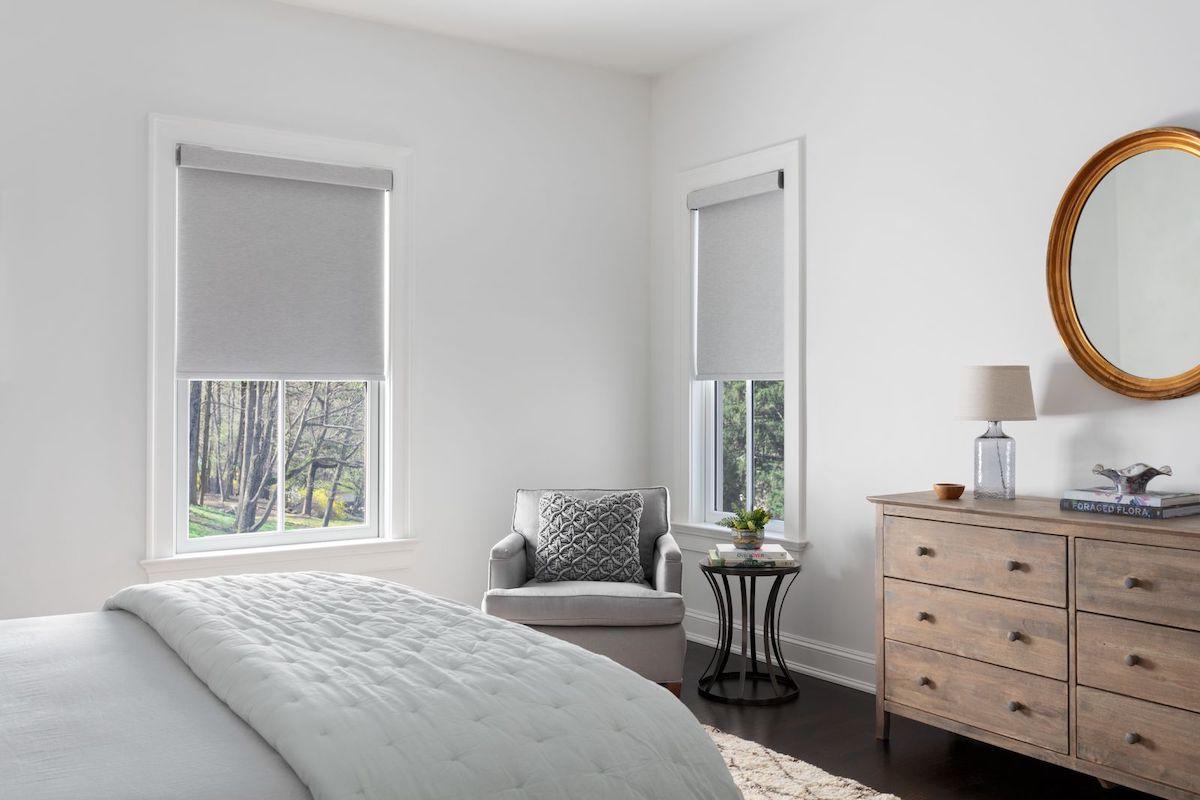
Roller blinds have come a long way since their humble beginnings. No longer is your only choice to pull down on a shade that will violently flap back up in a closed position, stopping wherever it pleases. New mechanisms for roller shades like softlift, smartlift, cordless, and even motorized operation are available now and bring new comfort and ease to this old favorite. Coupled with the widest selection of fabrics of any other window treatments, roller window shades really offer something for everyone.
Solar Shades
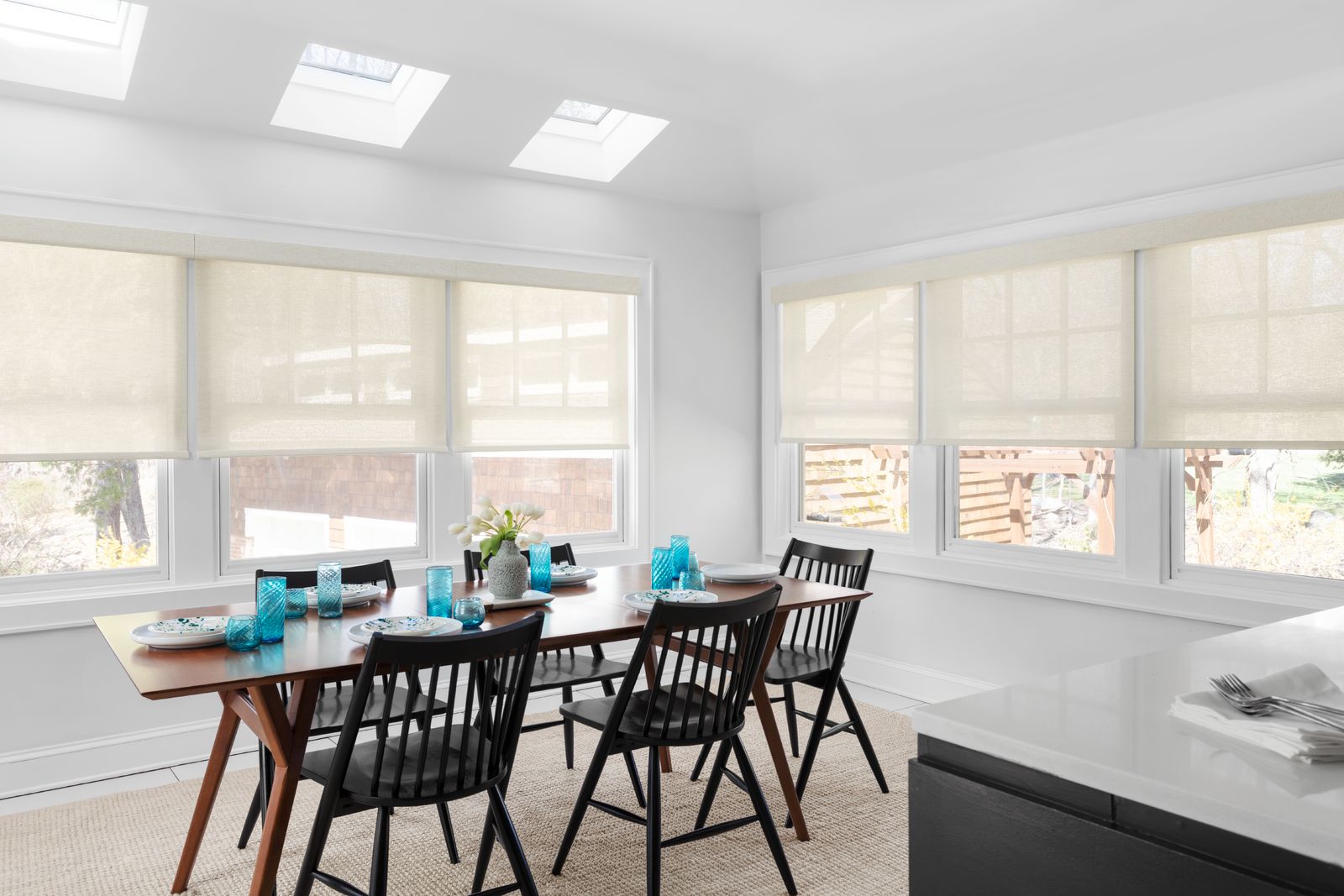
Solar shades have a roller shade construction but are made from a fabric with a unique purpose, to greatly reduce the ultraviolet rays and heat coming in your window to keep you comfortable at home. Solar shades are made from woven PVC and different styles will offer different amounts of privacy and UV protection depending on the tightness of the weave. Depending on the degree of “openness”, this shade also allows you to see through it; a practical advantage if you want to enjoy a beautiful view! Some solar shades offer privacy while also reducing solar glare using solar screens while others offer little privacy but are more decorative. Do sunny days heat up your room too much? Consider sun shades.
Cellular Shades
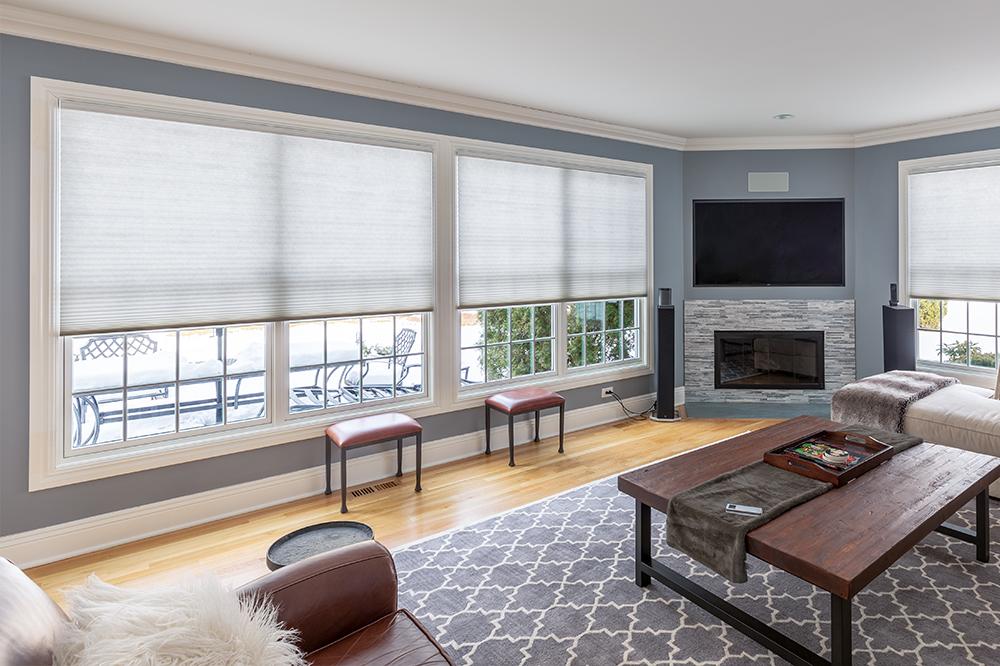
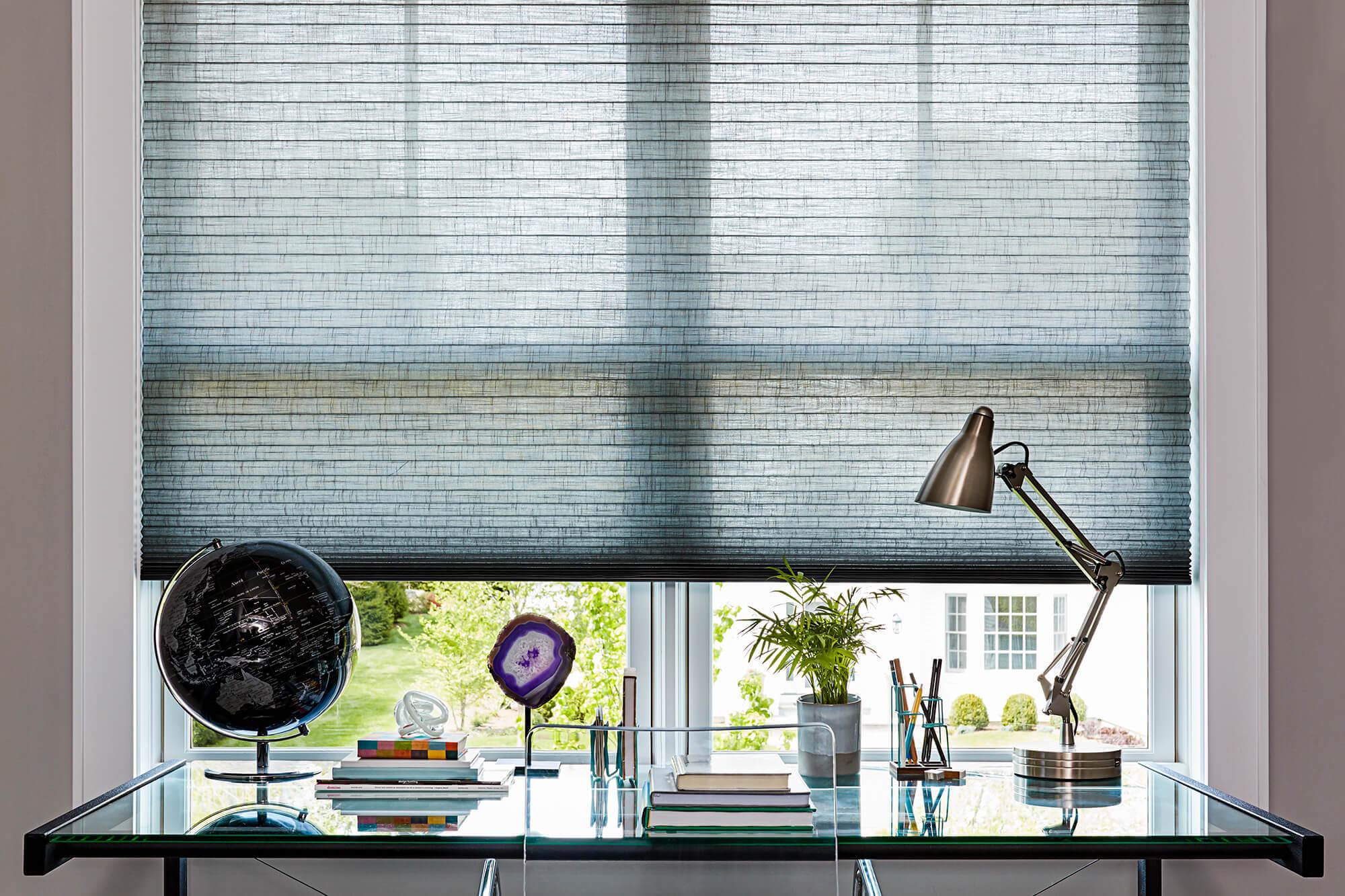
Cellular shades, or honeycomb shades, are one of our most popular styles of window treatment. They get their name from the construction on the material, a double wall construction that contains individual cells gives them their horizontally pleated look and superior insulation. Light-weight, contemporary, and modern, cellular shades come in a wide range of colors from sheer to blackout. These are popular in bedrooms and common areas and come in a wide range of neutrals and a few bold colors like black and navy blue. They range in privacy and light control from the almost-sheer Riviera, with its beautiful linen-like texture through classic light-filtering styles all the way to room-darkening shades and blackout options.
Roman Shades
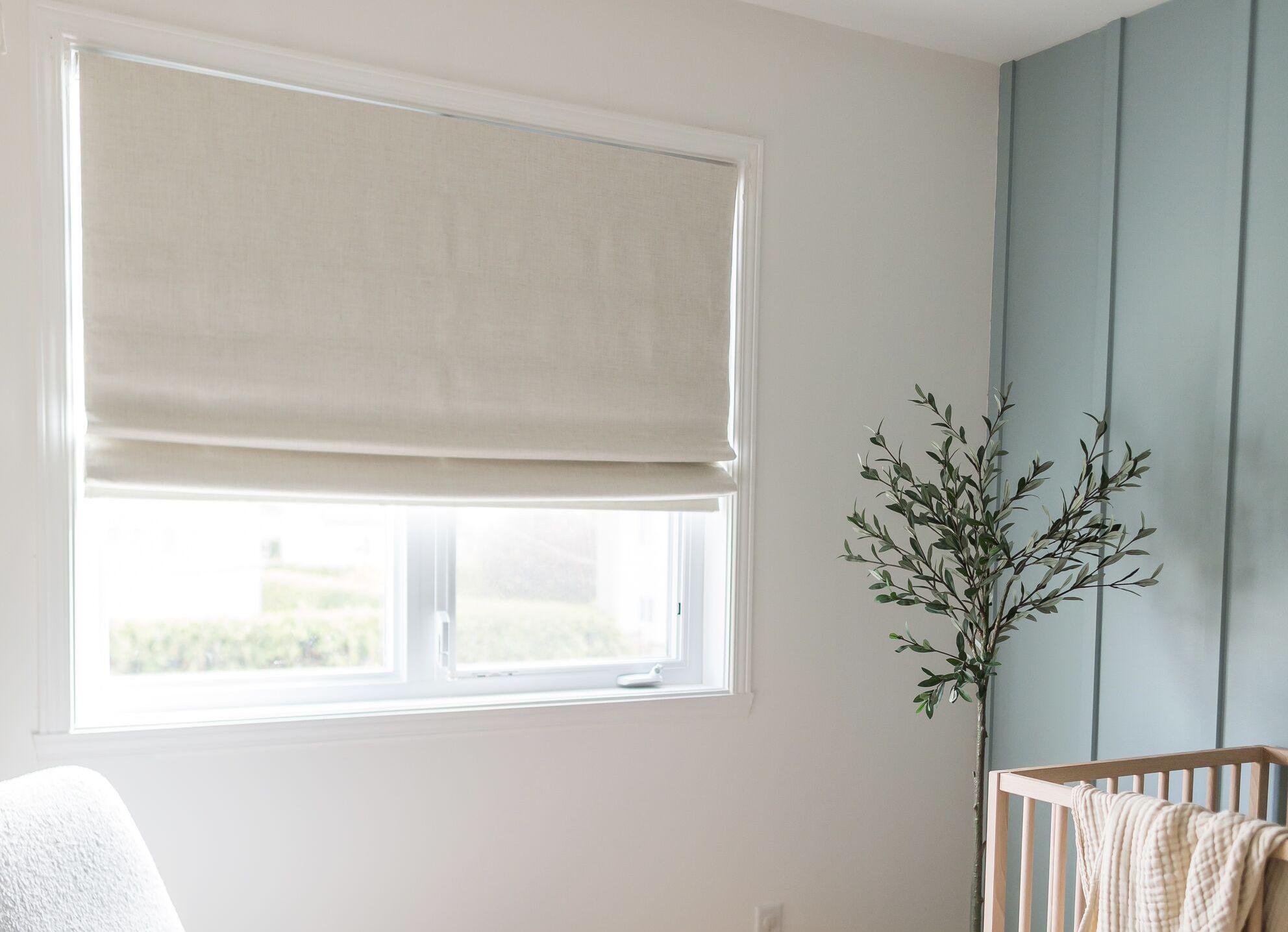
The gold standard for luxury, Roman shades add softness and luxury to any room with their lux home decor fabrics and can be backed with liners to block even more light than the fabric from which they are constructed. The classic style of roman shade features soft romantic pleats, while more modern styles, like waterfall and flat, have a clean, flat appearance but still feature luxurious home décor fabrics like linens, velvets, and decorative prints.
Sheer Shades
Cascade sheer shades and Serenity sheer shades are the newest and most modern offerings at Blinds to Go. They are real show stoppers and offer the best of both worlds, with the soft fabric of shades and the adjustability of slats. They are partially sheer but they still offer privacy and some even darken a room when in the closed position. Sheer shades add elegance and give a modern look. They are both constructed with strips of contrasting fabric that can be adjusted for various levels of privacy and light control, much like horizontal blinds.
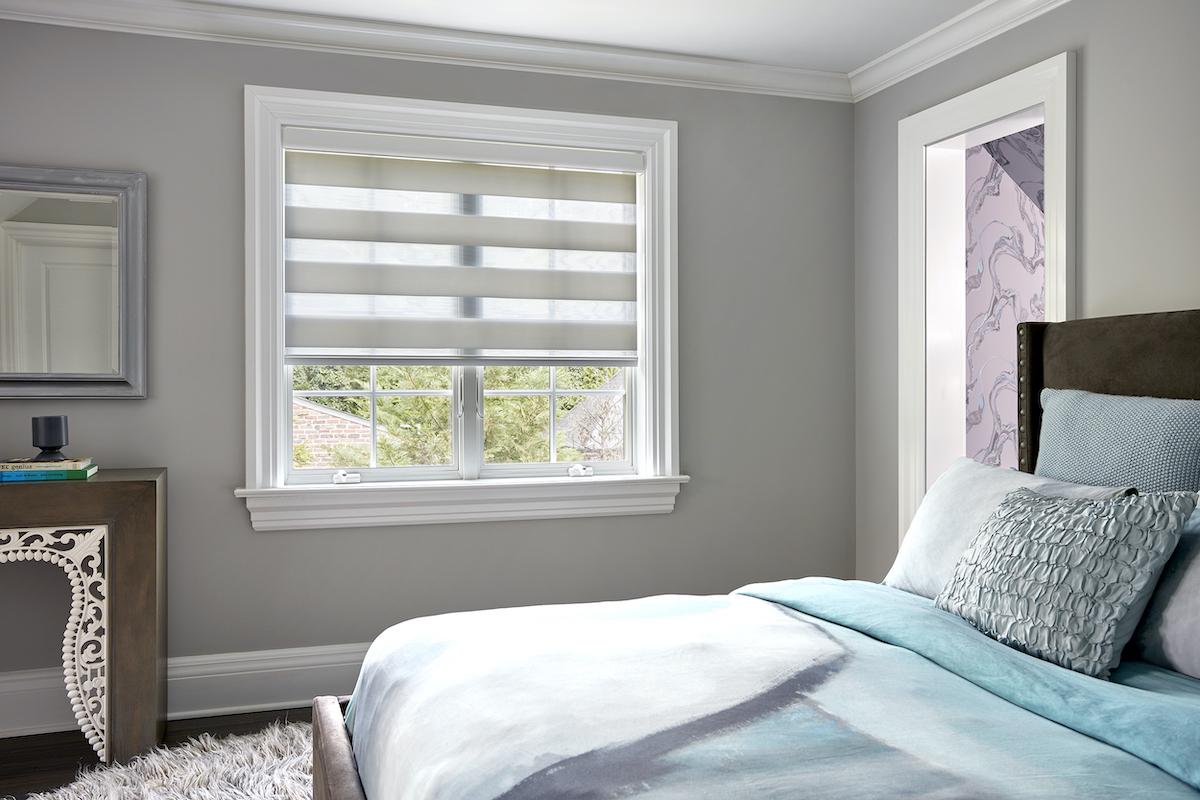
Cascade sheer shades, function like roller shades and virtually disappear when completely open. They have horizontal stripes ranging from 2.5" to 3.5" on a flat vertical surface. As you adjust Cascade sheer shades by pulling the string (on older models), pushing up or pulling down on the bottom bar, or with the touch of a button (if you chose motorized shades) the stripes of alternating opaque and sheer material on the front piece of fabric will line up with the stripes of fabric on the piece behind it, creating varying amounts of privacy and light control depending on the arrangement of those stripes.
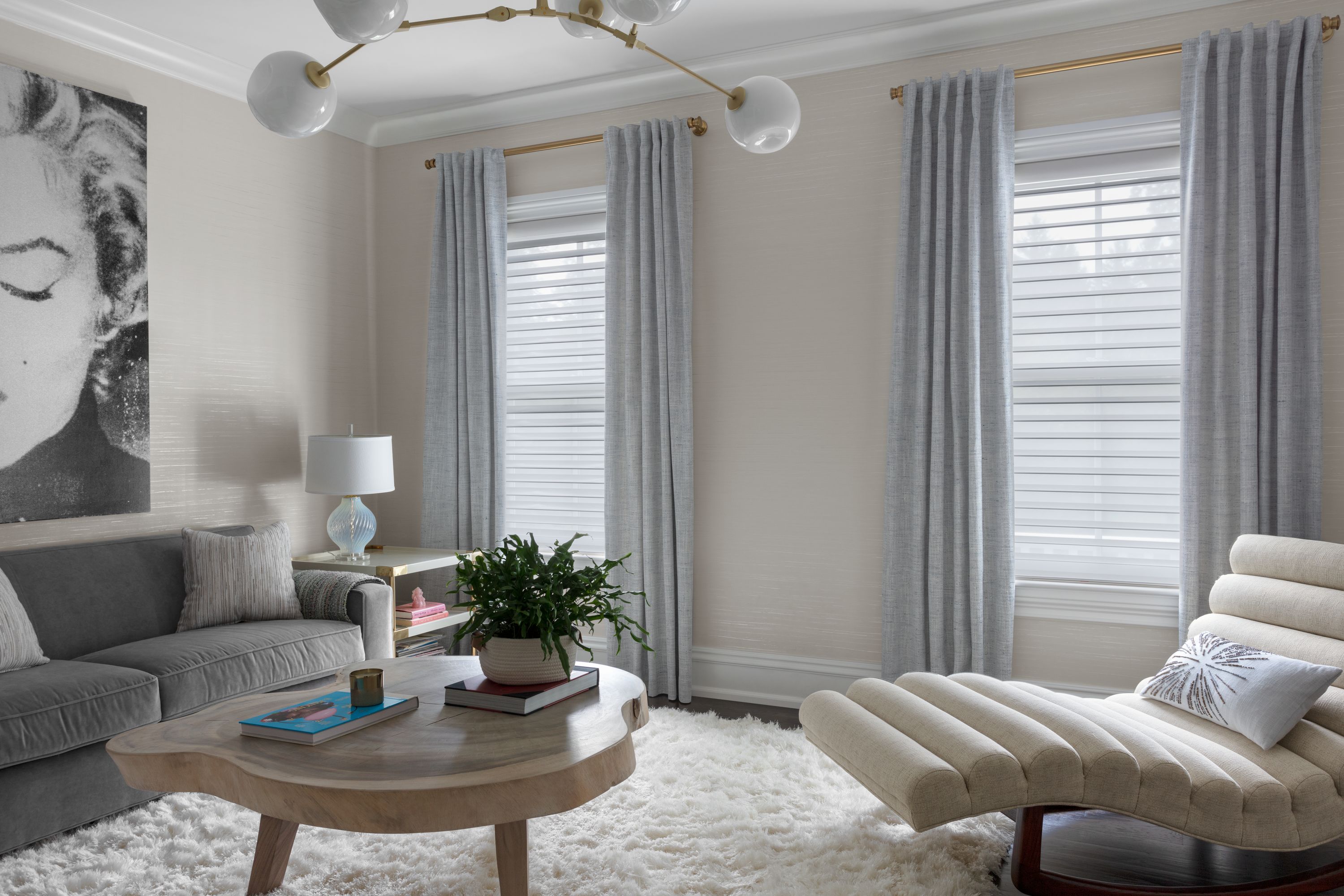
Serenity® sheer shades have slats of fabric arranged much like the slats of traditional horizontal blinds, but rather than being held together with strings, like wood or faux wood blinds, the fabric “slats” are attached to a solid piece of sheer material. The "slats" tilt open when the shade is fully lowered down and when raised, the shades fabric “slats” tilt closed and remain closed in all positions except when the shade is fully down.
More About Blackout and Light-Filtering Shades
Roller, cellular, and Roman shades come in sheer, light-filtering, and blackout materials. Blackout shades are essential for many to improve sleeping conditions and their ability to block out most light makes them a popular choice for kids’ rooms and nurseries where they help children sleep in relative darkness, even if it is still light outside. This is especially practical during the summer when the sun sets late. There are also many decorative “light-filtering” shade styles that filter the light if you want privacy and want to block some light but you don’t want total blackout.
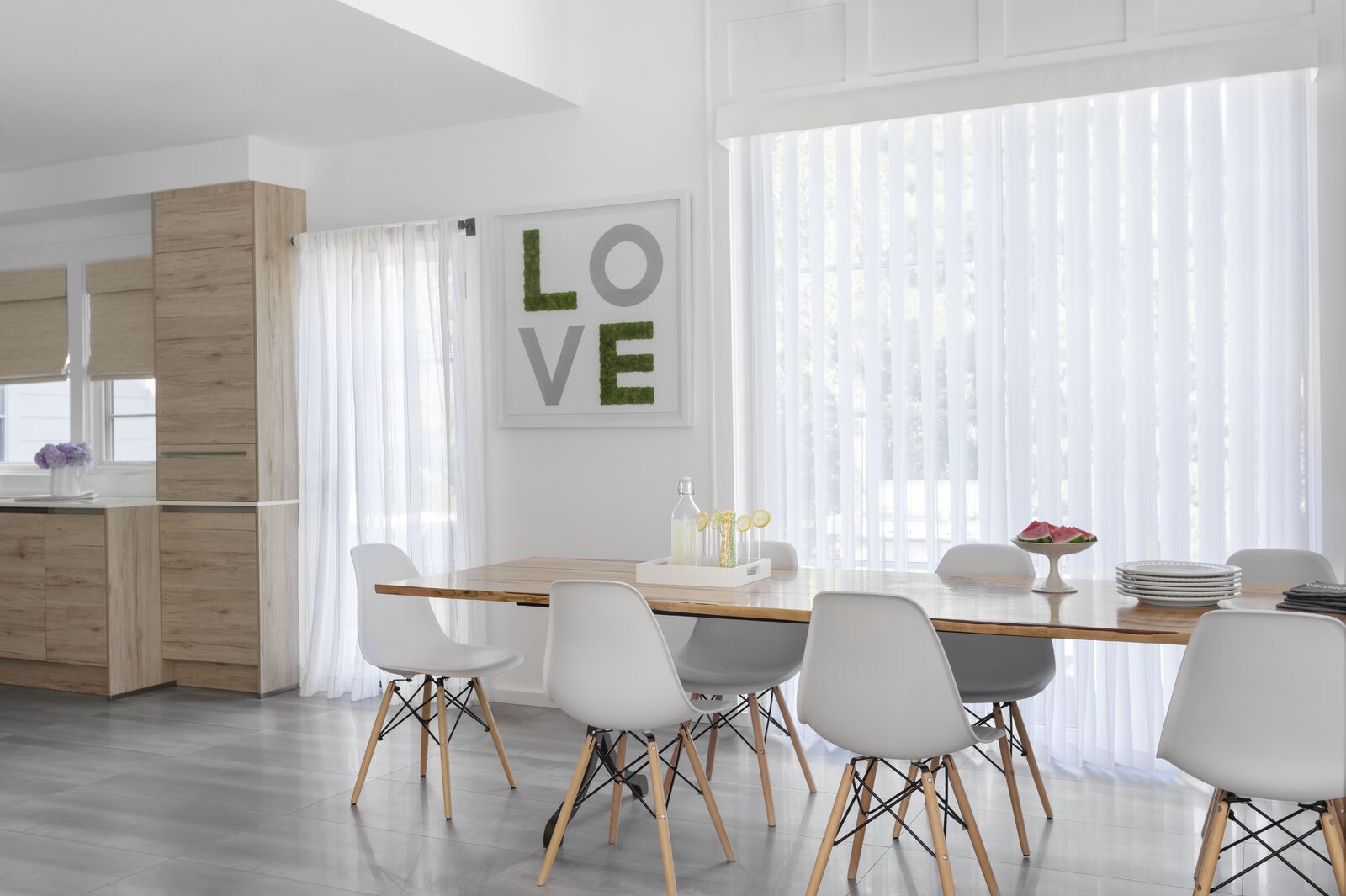
Shades or Blinds: Which Window Treatment is Right for Your Home?
Ultimately, deciding which window treatment is right for your home comes down to form and function. Some shades, like roller and cellular shades, suit a more modern aesthetic. If you have a more traditional home, a Roman shade or blind typically works better with that style.
Once you know what style you're trying to achieve, you can think about how you want to use the window treatment. Having a blind gives you the flexibility to have the shades closed but tilted open—in case you want partial light and visibility. On the other hand, shades provide a cleaner
The Pros & Cons: Blinds vs Shades
Window blinds and window shades bring character and functionality to any space. Blinds offer a classic look that’s perfect for a more structured interior. Their adjustable slats allow for precise light control, giving you the ability to tailor exactly how much light and visibility you want in your rooms. On the other hand, due to the fact that blinds are made up of individual slats, they will never create a fully blackout environment, nor will you be able to have them fully closed and still let light into the space.
Some of the pros of choosing shades are that you get the choice between sheer, light filtering, and blackout materials. This allows for more consistent privacy, without giving up light in the space. Also, due to the range of shade styles, you have a number of solutions to choose from that fit any aesthetic—from Roman shades in more traditional homes, to cellular or roller shades for a more modern look. That being said, with shades you are generally limited to either having it open or closed. Of course you can always get a top-down bottom-up shade, but even then you won’t have the degree of versatility that you do with a blind.
Window Blinds vs Shades: Best Choices for Every Room
Every room in your home deserves a window treatment that supports its purpose and enhances its aesthetic. In living spaces, light-filtering shades can create a soft, inviting glow, while wood or faux wood blinds add tailored dimension. Bedrooms benefit from blackout shades that offer privacy and restful darkness, while moisture-resistant blinds and shade are an optimal choice for kitchens and baths.
Selecting the best window blinds or shades for each room is a balance between design, function, and comfort. Consider how natural light moves through the space, the color palette, and your personal style. When chosen thoughtfully, your blinds or shades not only frame the view—they transform each room into a thoughtfully curated extension of your lifestyle.
How to Select the Right Window Treatment for Your Needs
Finding the perfect window treatment begins with understanding your home’s unique combination of light, architecture, and decor. Beyond aesthetics, the right choice should enhance your daily living—offering privacy, energy efficiency, or ambiance, depending on your needs. Every detail in the fine craftsmanship of custom window blinds and shades contributes to the art of refined living.
The key is to let form and function work together. Choose window blinds if you value precision and control; select shades when you crave softness and depth. No matter your preference, investing in high-quality materials and design expertise ensures a timeless, elevated result—one that beautifully complements your home.
And if this all feels overwhelming for you—don't worry! Whether you shop in one of our showrooms or schedule an appointment in your home, we have experts who will walk you through every step. From samples of all of our products to explaining what mechanisms will work best for you, our designers are equipped with everything you need to make the best decision for your space.
Shop All Shades
Shop All Blinds
As technology advances the lines between a simple curtain, shade, or blind may become blurred but the result is more and more options for the customer. Come into a Blinds To Go showroom with pictures of your room and window and we will help you pick the best option for your privacy concerns, light preferences, decor, and budget. Stop in today, shop on line, or give us a call at +1 (800) 254-6377.
Sign Up & Save $50 OFF
By filling out the above information, I agree to receive promotional emails and other communications from Blinds To Go. I understand I may unsubscribe at any time. Contact us for details or view our Privacy Policy