'%3e%3cpath%20d='M8%2014C11.3137%2014%2014%2011.3137%2014%208C14%204.68629%2011.3137%202%208%202C4.68629%202%202%204.68629%202%208C2%2011.3137%204.68629%2014%208%2014Z'%20fill='%23F0F0F0'/%3e%3cpath%20d='M14.0007%208.0001C14.0007%205.62133%2012.6164%203.56596%2010.6094%202.59546V13.4047C12.6164%2012.4342%2014.0007%2010.3789%2014.0007%208.0001Z'%20fill='%23D80027'/%3e%3cpath%20d='M2%208.0001C2%2010.3789%203.38434%2012.4342%205.39131%2013.4047V2.59546C3.38434%203.56596%202%205.62133%202%208.0001Z'%20fill='%23D80027'/%3e%3cpath%20d='M9.04254%208.78276L10.086%208.26102L9.56428%208.00016V7.47842L8.5208%208.00016L9.04254%206.95667H8.5208L7.99905%206.17407L7.47731%206.95667H6.95557L7.47731%208.00016L6.43383%207.47842V8.00016L5.91211%208.26102L6.95557%208.78276L6.69471%209.3045H7.7382V10.0871H8.25991V9.3045H9.3034L9.04254%208.78276Z'%20fill='%23D80027'/%3e%3c/g%3e%3cdefs%3e%3cclipPath%20id='clip0_17246_88409'%3e%3crect%20width='12'%20height='12'%20fill='white'%20transform='translate(2%202)'/%3e%3c/clipPath%3e%3c/defs%3e%3c/svg%3e)

Tailored Fit
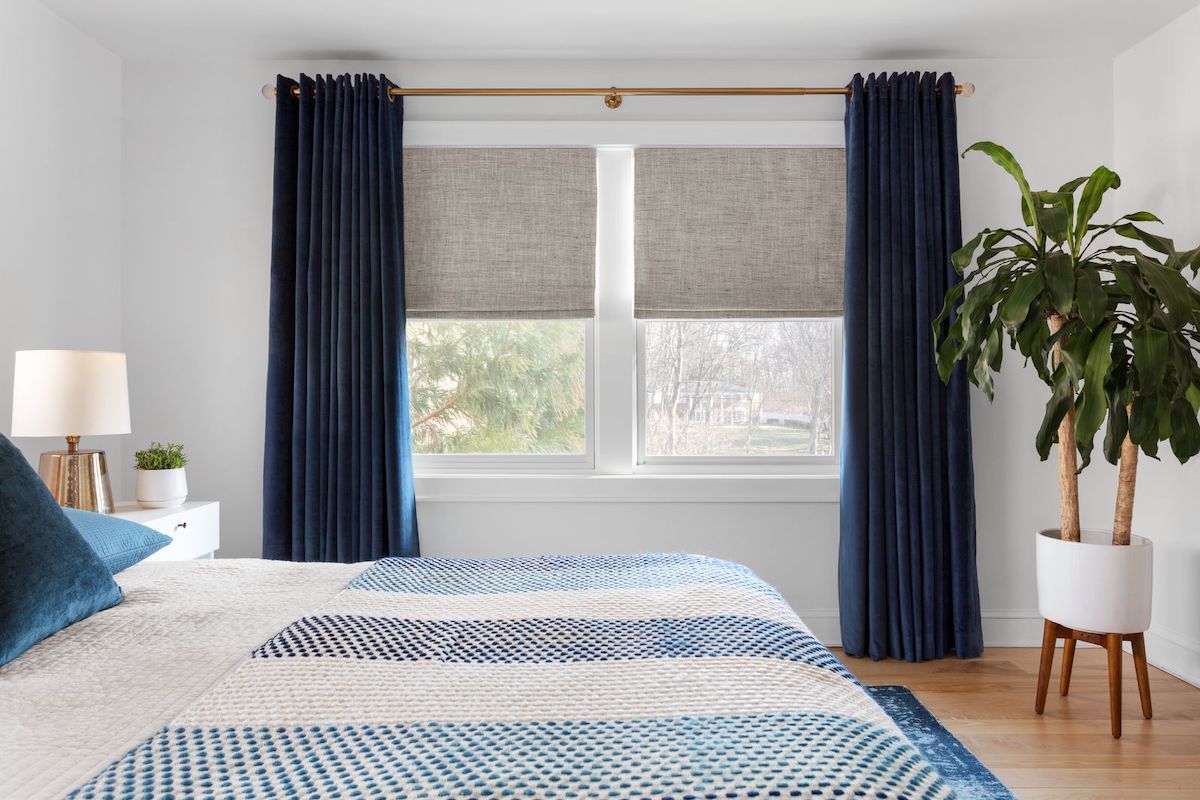
Drapery
Starting at68.52$51.39
Stylish and budget-friendly fixed-width panels with fully-customizable height
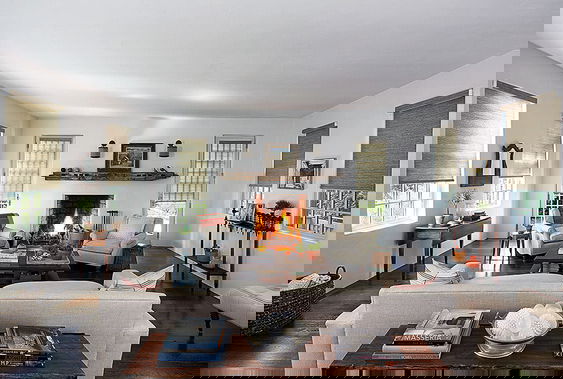
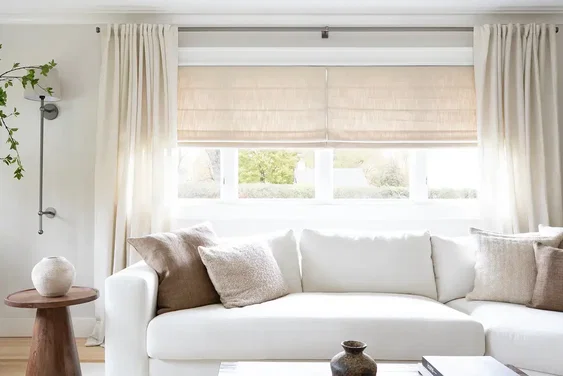
Roller Shades
STYLISH AND VERSATILE
Starting at$202.60
One of our most beloved window coverings, with options galore, today's roller shade is anything but traditional.
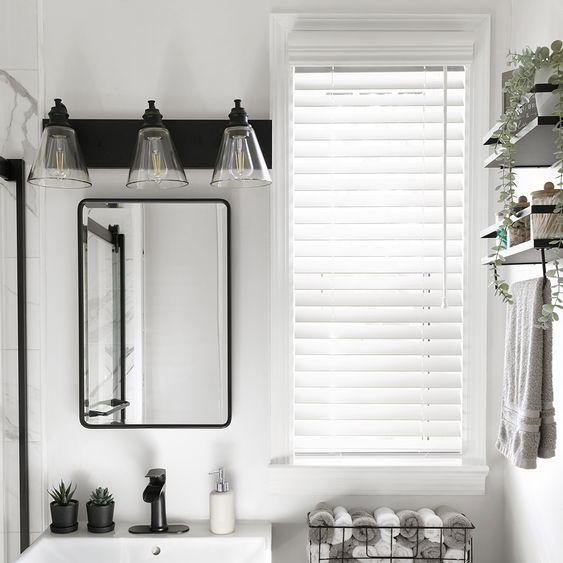
Faux Wood Blinds
DURABLE AND VERSATILE
Starting at81.21$60.91
Furnish your space in style with an economical alternative that delivers the look and beauty of real wood blinds, while staying on budget.
Questions? We’re here to help

Call an Expert
1 (800) 254-6377

Chat With an Expert
Get assistance from our online team.

Free In-Home Consultation
One-on-one design advice at your doorstep.
Visit a Showroom
Our knowledgable staff will guide you.
Apartment Window Treatment Solutions from Blinds To Go
Apartment window treatments: roller shades, drapery, and faux blinds address distinct urban living challenges where conventional window coverings fall short. Roller shades provide space-efficient light control without protrusion, solving the problem of limited wall clearance in compact layouts. Drapery delivers acoustic isolation and thermal regulation, addressing street noise and energy loss through large apartment windows. Faux blinds offer the appearance of real wood blinds at a fraction of the weight, solving the structural mounting concerns in multi-unit buildings where heavy hardware may violate lease terms. Each solution targets specific apartment limitations: minimal installation footprint, reversible mounting for renters, and custom sizing for irregular window openings common in converted or historic buildings.
Why Choose Window Treatments for Your Apartment?
Apartment window treatments add warmth, texture, and architectural interest to your living space. Unlike basic blinds or shades, our treatments offer softness and elegance while providing excellent light control and insulation. Our window treatments come in sheer, blackout, and room darkening options, allowing you to customize the ambiance of your apartment based on your needs.
Roller Shades, Drapery & Faux Blinds: Solutions for Apartment Living
Roller shades excel in apartments where space is constrained: they roll into a compact cassette requiring minimal wall clearance, unlike traditional blinds that protrude several inches. This solves furniture placement conflicts and maximizes usable square footage. Drapery addresses acoustic problems—street traffic, neighboring unit noise, and HVAC sound transmission—through fabric density and proper edge sealing, achieving measurable noise reduction coefficients. Faux blinds resolve weight limitations imposed by building codes and lease restrictions; they provide the aesthetic of wood blinds without structural mounting concerns, making them suitable for hollow-core walls common in apartment construction. Motorized versions of all three eliminate access problems for high-mounted or furniture-blocked windows, operating via remote or app control without physical reach requirements.
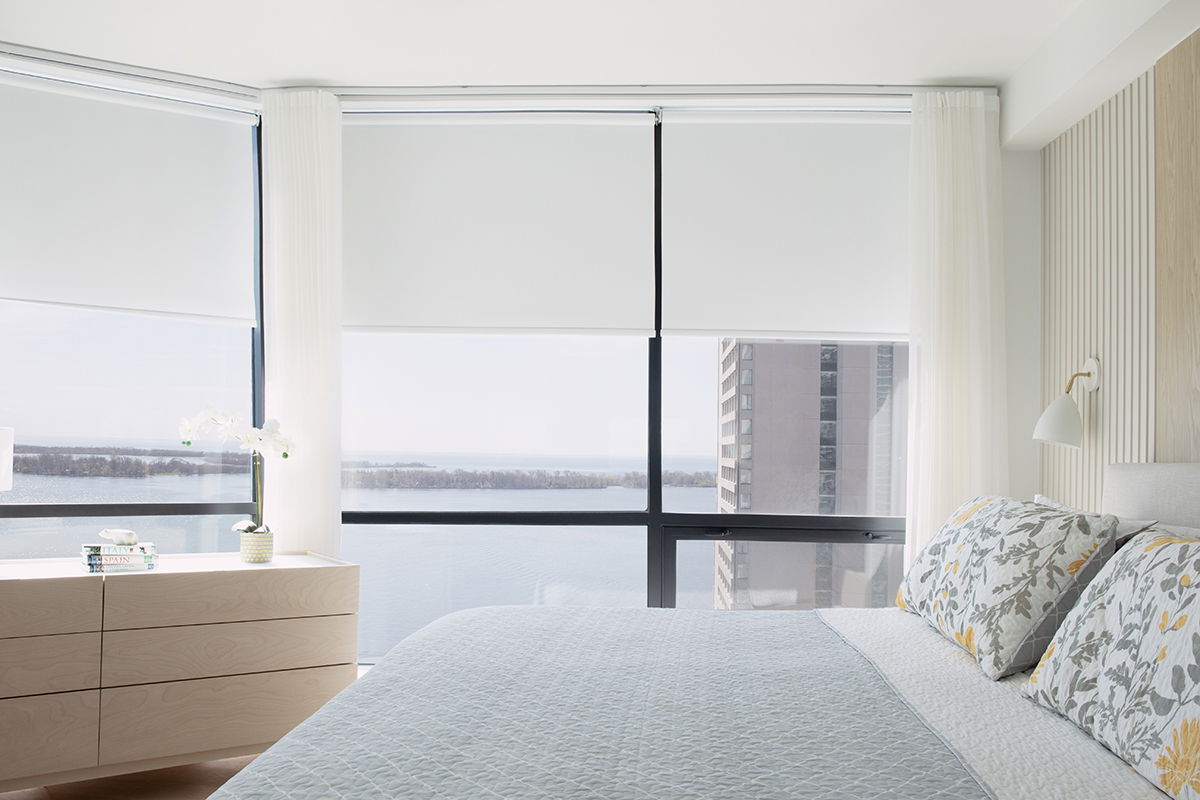
Roller Shades, Drapery & Faux Blinds
Roller shades distinguish themselves through minimal depth—typically 1.5 to 2 inches of wall projection compared to 4–6 inches for traditional blinds. Fabric options range from light-filtering to blackout, with motorized operation eliminating cord safety hazards in compact spaces. Drapery stands apart with its acoustic performance: layered fabrics with blackout or thermal linings achieve 15–25 decibel noise reduction, solving urban sound intrusion problems that blinds cannot address. Full-length drapery also provides superior thermal insulation, reducing heating and cooling costs in apartments with large windows. Faux blinds offer authentic wood appearance without moisture sensitivity—crucial for apartments with limited climate control or proximity to kitchens and bathrooms. Unlike real wood, faux blinds maintain dimensional stability in varying humidity, preventing warping that compromises operation in apartment environments.