'%3e%3cpath%20d='M8%2014C11.3137%2014%2014%2011.3137%2014%208C14%204.68629%2011.3137%202%208%202C4.68629%202%202%204.68629%202%208C2%2011.3137%204.68629%2014%208%2014Z'%20fill='%23F0F0F0'/%3e%3cpath%20d='M14.0007%208.0001C14.0007%205.62133%2012.6164%203.56596%2010.6094%202.59546V13.4047C12.6164%2012.4342%2014.0007%2010.3789%2014.0007%208.0001Z'%20fill='%23D80027'/%3e%3cpath%20d='M2%208.0001C2%2010.3789%203.38434%2012.4342%205.39131%2013.4047V2.59546C3.38434%203.56596%202%205.62133%202%208.0001Z'%20fill='%23D80027'/%3e%3cpath%20d='M9.04254%208.78276L10.086%208.26102L9.56428%208.00016V7.47842L8.5208%208.00016L9.04254%206.95667H8.5208L7.99905%206.17407L7.47731%206.95667H6.95557L7.47731%208.00016L6.43383%207.47842V8.00016L5.91211%208.26102L6.95557%208.78276L6.69471%209.3045H7.7382V10.0871H8.25991V9.3045H9.3034L9.04254%208.78276Z'%20fill='%23D80027'/%3e%3c/g%3e%3cdefs%3e%3cclipPath%20id='clip0_17246_88409'%3e%3crect%20width='12'%20height='12'%20fill='white'%20transform='translate(2%202)'/%3e%3c/clipPath%3e%3c/defs%3e%3c/svg%3e)

Questions? We’re here to help

Call an Expert
1 (800) 254-6377

Chat With an Expert
Get assistance from our online team.

Free In-Home Consultation
One-on-one design advice at your doorstep.
Visit a Showroom
Our knowledgable staff will guide you.
Basement Drapery Solutions from Blinds To Go — Custom & Motorized
Basement drapery addresses below-grade challenges with specialized fabric options: sheer drapery filters daylight while maintaining privacy, solving light management problems in naturally dark basement spaces. Blackout drapery completely blocks exterior visibility and light, addressing security and privacy concerns for ground-level basement windows in converted living spaces. Room-darkening drapery provides adjustable light control between sheer and blackout performance. Moisture-resistant fabrics solve humidity problems that damage conventional materials in below-grade environments. Full-coverage installation provides thermal insulation, reducing heating costs in basement living spaces. Each drapery type targets specific basement needs: light control, security, privacy, and thermal efficiency.
Why Choose Drapery for Your Basement?
Basement drapery provides essential solutions for below-grade spaces: superior privacy for ground-level windows, thermal insulation to reduce energy costs, and moisture-resistant materials that withstand basement conditions. Unlike standard coverings, drapery offers full coverage and adjustable light control perfect for converted living spaces.
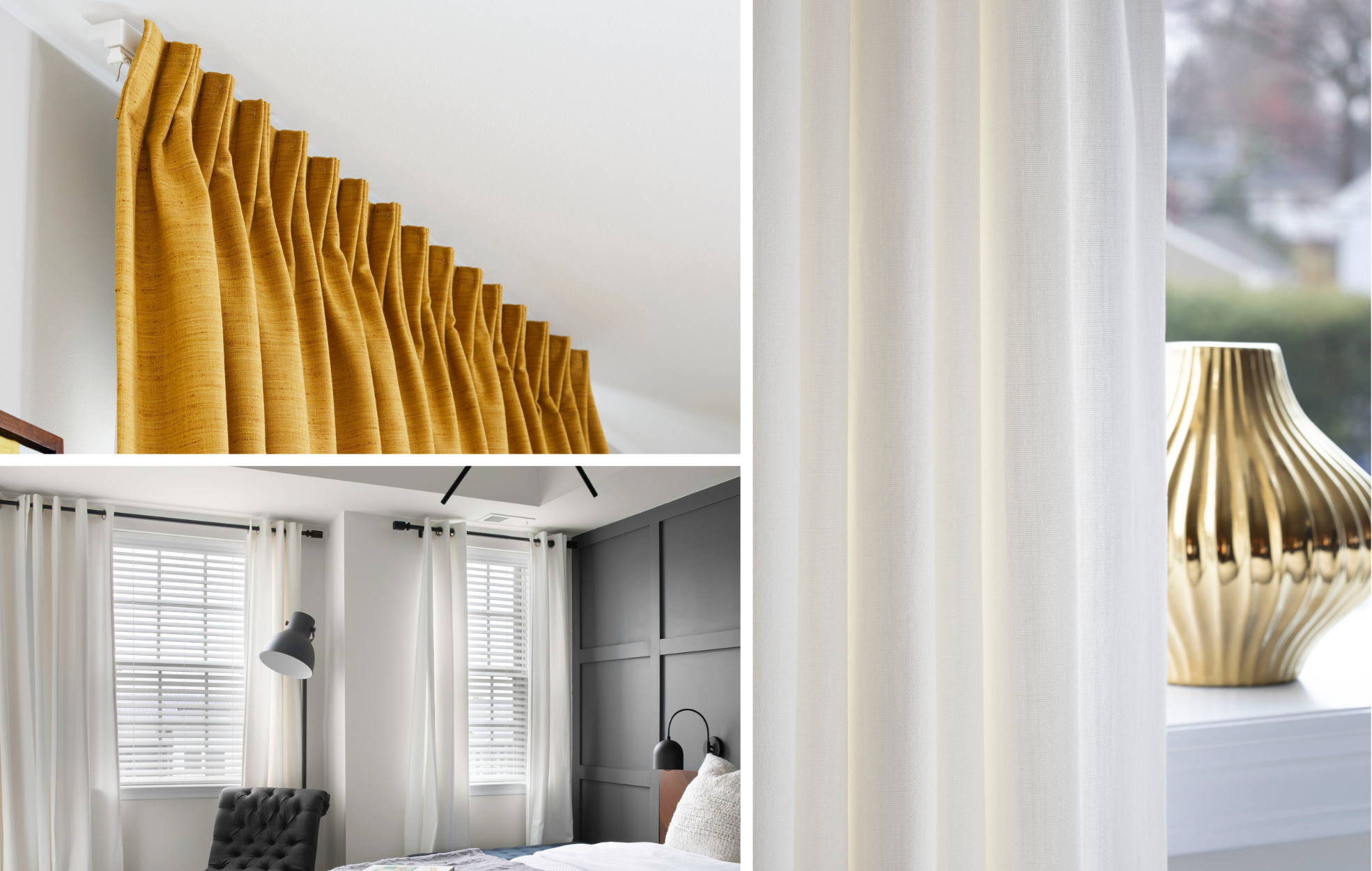
Basement Drapery: Fabric Types & Hardware Selection
Sheer drapery distinguishes itself through light filtration: translucent fabrics allow natural light penetration while maintaining daytime privacy, solving light management problems in dark basement spaces. Moisture-resistant sheer fabrics withstand basement humidity when properly specified. Blackout drapery stands apart with complete opacity: dense fabrics with blackout linings create total light blocking and visual barriers from ground-level, solving security and privacy concerns where windows are accessible from exterior grade. Room-darkening drapery offers intermediate performance: adjustable coverage provides variable light control between sheer and blackout. Full-coverage drapery with thermal linings provides superior insulation, reducing heat loss through basement windows—critical in below-grade spaces. Ceiling-mounted motorized tracks accommodate floor-to-ceiling installations, eliminating furniture interference while providing remote operation access.